
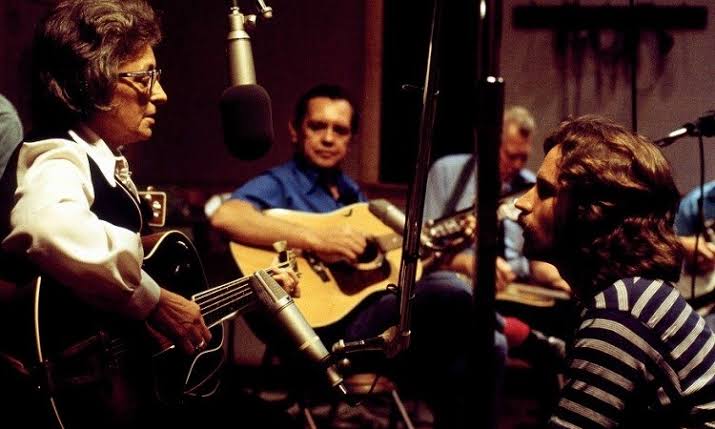
In today’s digital age, a solo artist with a guitar and a story can feel like a distinctly modern phenomenon. Yet, the essence of the singer-songwriter stretches back through centuries, far beyond the glare of studio lights and streaming algorithms. It finds its roots in the wandering troubadours of medieval Europe, the custodians of folk ballads in the British Isles, and the raw, confessional voices of 20th-century coffeehouses. This lineage is not a relic but a living tradition, one that continues to evolve in the hands of contemporary storytellers. At Hazy Tales, we see the work of Awna Teixeira as a vibrant thread in this rich tapestry—a continuation of that ancient urge to weave personal narrative and universal truth into song, connecting the intimate space of creation directly to the listener’s ear.
The Roots: Troubadours, Folk and the Oral Tradition
Before the concept of a recorded “single” existed, stories travelled on foot and by word of mouth. The singer-songwriter’s earliest ancestors were the troubadours and minstrels of medieval Europe, who composed and performed poems and songs for courts and public squares. Their art was mobile, personal, and deeply connected to the human experience of their time. In the British Isles, this tradition solidified into the folk ballad, a narrative song passed down orally through generations, preserving tales of love, loss, rebellion, and the supernatural. The meticulous work of collectors like Francis James Child, who catalogued the 305 canonical “Child Ballads” in the 19th century, gave us a snapshot of this vast oral history, demonstrating how melodies and stories were fluid, changing with each singer who carried them forward.
The Wandering Minstrel and the Oral Tradition
The key to this early form was its impermanence and adaptability. A minstrel’s performance was a unique event, shaped by the audience, the locale, and the moment. There was no definitive version, only the version sung that day. This oral tradition relied on memorable, repetitive structures and potent imagery to ensure stories survived. Institutions like London’s Cecil Sharp House, the home of the English Folk Dance and Song Society, stand as modern monuments to this history, dedicated to preserving and celebrating these songs that were once only carried in memory.
The Folk Revival’s Role in Preservation
By the early 20th century, the industrial revolution and urbanisation threatened to silence these old songs. The folk revival movements in the UK and US arose as a direct response, with artists and scholars seeking to preserve a vanishing cultural heritage. In Britain, figures like A.L. Lloyd and Ewan MacColl spearheaded this effort, while labels played a crucial role. Topic Records, founded in 1939 and recognised as the world’s oldest independent record label, became an essential archive and platform for British folk artists, ensuring the ballads collected by Sharp and others found a new, wider audience. This revival didn’t just museumise the music; it reanimated it, setting the stage for a new generation to make these traditional forms speak to contemporary life.
The 20th Century Catalyst: From Folk Revival to Confessional Songwriting
The mid-20th century witnessed the singer-songwriter evolve from a preserver of tradition into a powerful vehicle for contemporary, personal expression. The epicentre of this shift was the Greenwich Village folk scene of 1960s New York. Here, the focus turned inward; the song became a canvas for the artist’s own emotions, politics, and observations. Bob Dylan’s transformation from a folk interpreter to a poet of bewildering originality demonstrated that the singer-songwriter could be a visionary, challenging social norms and artistic boundaries with nothing but words, melody, and conviction.
The Greenwich Village Influence Crosses the Atlantic
This new, introspective model resonated powerfully across the Atlantic. UK artists absorbed the directness and poetic ambition of the Greenwich Village sound but filtered it through a distinctly British sensibility. The influence was less about imitation and more about permission—the permission to be personal, complex, and artistically ambitious. The BBC’s legendary Maida Vale Studios became a key conduit for this sound, hosting seminal sessions where these new, intimate voices were broadcast into homes nationwide, from visiting American icons to homegrown talents finding their feet.
The British Confessional Voice Emerges
In response, a wave of profoundly introspective British singer-songwriters emerged. Artists like Nick Drake, with his fragile, intricate guitar work and haunting melancholy, and Sandy Denny, whose writing blended traditional folk gravitas with piercing personal emotion, defined what we now call the “confessional” style. They moved beyond storytelling about external characters to storytelling about the inner self. Their work proved that the singer-songwriter genre could bear the weight of profound vulnerability, creating a deep, private connection with the listener that felt radically different from the pop music of the era.
The Modern Sound: Studio Craft and Genre Fusion
As the singer-songwriter’s stature grew, so did their artistic toolkit. The 1970s saw the genre embrace the recording studio not merely as a documentarian’s tool but as an integral part of the composition. The album became a unified artistic statement, a “canvas” where soundscapes could be painted to support the lyrical narrative. Joni Mitchell’s seminal album ‘Blue’ (1971) is a masterclass in this approach—its seemingly stark confessionals are subtly framed by innovative tunings, piano arrangements, and production choices that amplify the emotional core. This period marked the transition from the singer-songwriter as a purely acoustic entity to a sophisticated studio artist.
The Album as a Canvas: Studio Production
Producers and engineers became key collaborators. In the UK, the influence of labels like Island Records was pivotal. Founded in Jamaica but becoming a powerhouse in London, Island provided a home for artistically ambitious songwriters where genre-blending was encouraged. Their studios and production expertise helped artists like John Martyn and Nick Drake create lush, textured albums that used studio technology—like tape echo and phased guitar—to expand the emotional palette of the acoustic song. The goal was no longer just to capture a live performance, but to build a sonic world the listener could inhabit.
Blending Genres: Folk-Rock and Beyond
This studio freedom accelerated genre fusion. The rigid boundaries between folk, rock, jazz, and pop dissolved. British artists like Richard Thompson and the musicians of the folk-rock movement plugged in, marrying the narrative depth of folk with the energy and instrumentation of rock. This blending was celebrated at events like the Cambridge Folk Festival, one of the UK’s longest-running and most influential festivals, which has consistently championed a broad, innovative definition of roots music. The singer-songwriter was no longer defined by a specific sound, but by the primacy of the song itself, which could now be arranged in countless ways.
The Contemporary Landscape: Independence and Digital Storytelling
The digital revolution of the 21st century has democratised the singer-songwriter’s path in ways the troubadours could never have imagined. The traditional gatekeepers of major labels and radio have been joined, and often bypassed, by direct-to-fan platforms. This has sparked a renaissance of the DIY ethos, granting artists unprecedented creative control over their music, image, and narrative. For today’s singer-songwriter, the toolkit includes not just an instrument, but a website, a social media presence, and a digital storefront.
The DIY Ethos and Direct-to-Fan Connection
This independence mirrors the self-sufficiency of the wandering minstrel but on a global scale. Artists can now fund recordings through crowd-funding, sell music and merchandise directly via platforms like Bandcamp, and build a community without intermediary filters. This model empowers a diverse range of voices and allows for niche genres and personal stories to find their audience. It places the relationship between artist and listener at the centre, echoing the direct connection of a folk club or village green, but sustaining it across continents.
Digital Platforms as the New Village Green
Streaming services like Spotify and Apple Music are the new, albeit algorithmically complex, village greens—spaces of discovery where a listener in Glasgow can stumble upon a songwriter from Vancouver. Meanwhile, YouTube and Instagram have become vital for visual storytelling, allowing artists to share music videos, behind-the-scenes glimpses, and live sessions that flesh out their creative world. The challenge and opportunity of the modern era is to use these tools to build genuine connection amidst the noise, to ensure the personal art of songwriting retains its humanity in the digital marketplace.
The Hazy Tales Lens: Awna Teixeira’s Place in the Tapestry
It is within this evolving historical context that we view the work of Awna Teixeira. Her artistry is a conscious and intuitive synthesis of the singer-songwriter’s journey. She carries the narrative torch of the folk ballad tradition, the confessional depth of the 70s, and the independent spirit of the digital age, all while forging a sound that is distinctly her own. Her roots in the collaborative, roots-oriented Canadian scene, notably with the beloved band Po’ Girl, ground her in a community-based musicianship that values songcraft and authenticity above all.
Storytelling Through Music and Visuals
Awna’s songwriting embodies the core tenet of the genre: personal narrative as universal resonance. Her lyrics are vivid and cinematic, drawing listeners into specific emotional landscapes. This commitment to story extends beyond audio. Her music videos and visual art are not mere promotions but extensions of the song’s world, a modern take on the troubadour’s ability to paint pictures with words. She understands that in today’s landscape, the song can be a starting point for a wider creative universe, a principle we actively explore at Hazy Tales.
An Instrumental Voice: The Gutbucket Bass
Perhaps the most distinctive thread in Awna’s tapestry is her instrument of choice: the gutbucket bass. This homemade, percussive instrument—often a washtub, a pole, and a single string—roots her sound in the raw, DIY spirit of early blues and folk. Its deep, resonant thump provides a primal, rhythmic heartbeat to her songs, connecting her music to earthier, older traditions while creating a unique sonic signature. In choosing the gutbucket, she makes a statement about accessibility, creativity, and character, proving that the singer-songwriter’s voice is expressed not just through lyrics and melody, but through the very texture of the sound they create.
Conclusion
The history of the singer-songwriter is a story of constant reinvention, from oral ballads to studio masterpieces to digital streams. Yet, its power has always resided in one unchanging element: the capacity for a single voice, armed with nothing but truth and melody, to forge a profound and enduring connection. It is a tradition built on authenticity, narrative, and personal vision. At Hazy Tales, we believe Awna Teixeira’s work proudly carries this torch forward, blending deep musical roots with a modern, independent spirit and the unmistakable voice of her gutbucket bass. She is a contemporary storyteller, proving that this ancient art form remains as vital and resonant as ever.
Frequently Asked Questions
What exactly defines a ‘singer-songwriter’?
At its core, a singer-songwriter is an artist who writes, composes, and performs their own original material. The key distinction is the fusion of the authorial voice with the performing voice; the songs are personal expressions, not interpretations of others’ work. While often associated with folk and acoustic music, the genre now encompasses artists across styles, united by the primacy of their own songwriting and artistic vision.
How did the UK folk revival differ from the American one?
While both sought to preserve traditional music, the UK revival had a stronger scholarly and archival bent, heavily focused on collecting and cataloguing centuries-old British ballads (as seen with the Child Ballads and Topic Records). The American revival, particularly in the 1960s, quickly became more contemporary and politicised, using folk forms as a vehicle for modern protest and social commentary, which then influenced the UK’s own confessional wave.
Why are platforms like Bandcamp so important for modern singer-songwriters?
Bandcamp and similar direct-to-fan platforms are crucial because they return control and a greater share of revenue to the artist. They foster a closer community, allow for creative merchandising (like selling vinyl with digital downloads), and enable fans to support artists directly. This model sustains the independent ethos that allows diverse, non-commercial songwriting to thrive outside the major-label system.
What is the significance of the gutbucket bass in Awna Teixeira’s music?
The gutbucket bass is significant both sonically and symbolically. Sonically, it provides a unique, deep, and rhythmic foundation that sets her music apart. Symbolically, it connects her to a lineage of homemade, grassroots music-making—it embodies a DIY spirit, accessibility, and a raw, earthy authenticity that aligns perfectly with the honest tradition of singer-songwriter storytelling.
Where can I experience the singer-songwriter tradition in the UK today?
The tradition is alive and well across the UK. You can experience it at:
- Long-running festivals like the Cambridge Folk Festival.
- Folk clubs and venues up and down the country, many affiliated with the network centred on Cecil Sharp House in London.
- Independent record stores that specialise in folk and acoustic music.
- Digital platforms, where live sessions from places like the BBC’s Maida Vale Studios (and its successors) continue to be curated and broadcast.